
Ethiopia, a land rich in history and cultural diversity, is home to a plethora of colorful festivals and celebrations. One such remarkable event is the Meskel celebration, an ancient tradition deeply rooted in Ethiopian Orthodox Christianity. Meskel, meaning "cross" in Amharic, commemorates the discovery of the True Cross upon which Jesus Christ was crucified. This vibrant festival, celebrated on September 27th each year, brings together communities, ignites spiritual fervor, and showcases Ethiopia's cultural heritage. Let us delve into the fascinating world of the Meskel celebration in Ethiopia.
The Legend of Meskel
According to Ethiopian Orthodox Christian tradition, the story of Meskel dates back to the 4th century AD. The legend narrates that Empress Helena, the mother of Emperor Constantine the Great, embarked on a pilgrimage to Jerusalem to search for the True Cross. Guided by divine intervention, she was led to a bonfire by a revelation from heaven. Empress Helena then ordered the construction of a church on the spot where the bonfire was lit, marking the discovery of the True Cross. This event is commemorated during the Meskel celebration in Ethiopia.
The Meskel Celebration
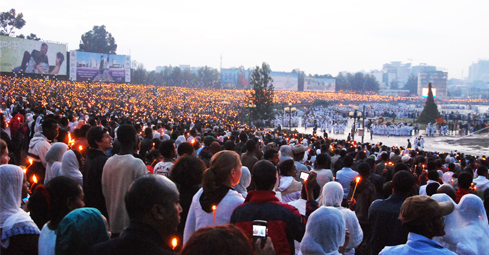
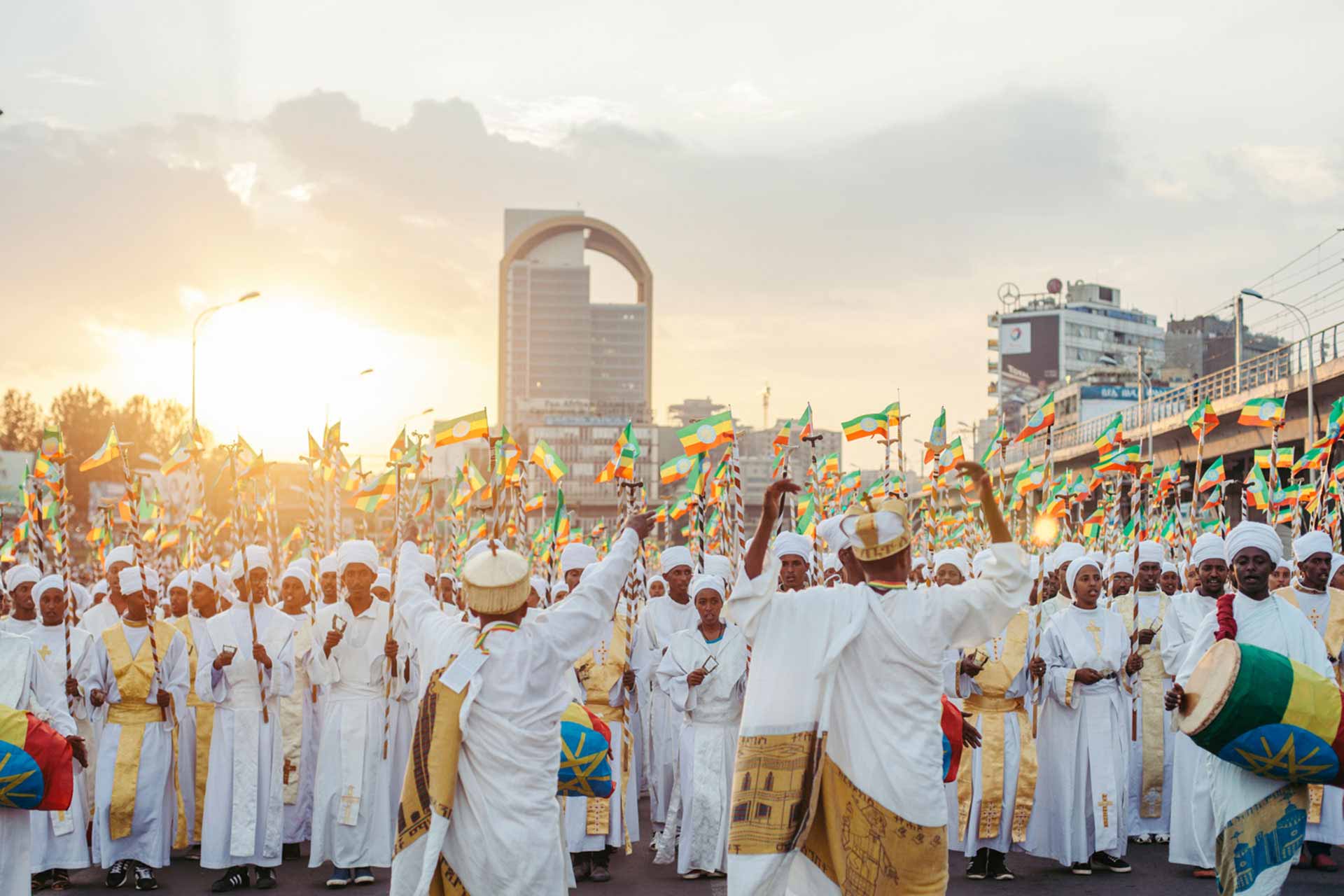
Meskel is a grand celebration featuring a fusion of religious rituals, cultural performances, and communal gatherings. The festivities commence on the eve of Meskel, known as Demera. In towns and villages across Ethiopia, people gather at the central square or open fields, adorned in traditional attire and carrying lit torches, to reenact the bonfire lit by Empress Helena. This procession symbolizes the spreading of the light of faith and the triumph of Christianity.
 Celebration at Meskel Square
The highlight of the Demera ceremony is the lighting of the massive bonfire, known as the Demera. A large wooden structure, meticulously arranged with dry tree branches and topped with a cross, is set ablaze amidst chants, hymns, and prayers. The flames illuminate the night sky, creating a mesmerizing spectacle that signifies the joyous moment of the True Cross revelation.
Throughout the celebration, religious leaders clad in splendid ecclesiastical robes conduct liturgical services, and the air resonates with soul-stirring chants and hymns. The faithful gather around the bonfire, engage in prayer, and offer thanks for the blessings bestowed upon them. Joyful singing and dancing fill the atmosphere, embodying the spirit of unity and communal harmony.
Cultural Significance and Unity
Beyond its religious significance, the Meskel celebration serves as a cultural emblem of Ethiopian identity. It reflects the nation's rich heritage, traditions, and values, highlighting the deep-rooted connection between faith and community. The festival provides an opportunity for Ethiopians, both young and old, to come together, strengthen bonds, and celebrate their shared history.
The Meskel celebration in Ethiopia is a captivating tapestry of religious devotion, cultural richness, and community camaraderie. It stands as a testament to the country's ancient traditions and the profound influence of Ethiopian Orthodoxy. As the bonfires illuminate the night sky during Meskel, Ethiopia comes alive with a vibrant display of faith, joy, and togetherness. This cherished festival is a testament to the enduring spirit of the Ethiopian people and serves as a reminder of the power of unity and celebration in fostering cultural heritage.