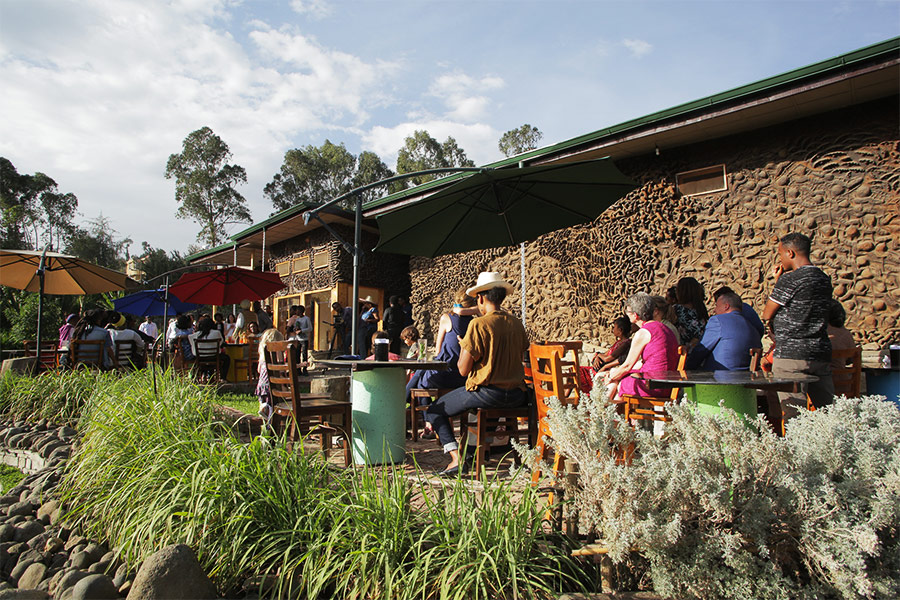
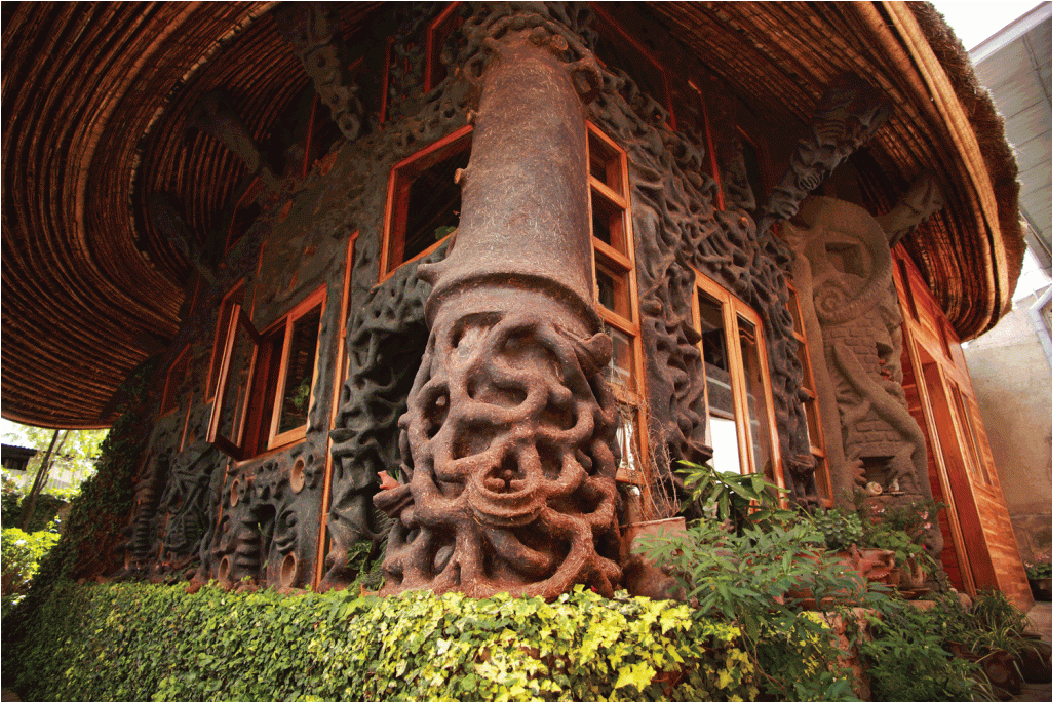
When you think of a museum, what comes to mind? A sterile white room punctuated by sculptures on pedestals, perhaps. Or maybe a grandiose building filled with oil paintings in gold frames and trinkets from bygone eras. Zoma Museum in the Mekanisa district of the Ethiopian capital, Addis Ababa, is a far cry from any such institution. In fact, it's so different that it's rather hard to describe.
Set away from the sprawling residences and concrete blocks that are starting to envelop Addis, Zoma is a verdant oasis consisting of an earthen art gallery, a restaurant, a circus school, a primary school, a library, an organic garden. It's an urban escape. “You don't just come here to look at art - the whole thing is art. We use the land as a canvas and paint it with green,” co-founder Meskerem Assegued tells me as she sits in the gardens, near-engulfed in some towering ginger plants.
It's Assegued, an anthropologist and art curator, along with acclaimed artist Elias Sime who are responsible for this sustainable haven. They spent nearly two decades getting it to where it is now, including four years building and countless amounts of money funding it themselves. It truly is a labour of love.
The pair began collaborating back in 2002, when they set up the Zoma Contemporary Art Centre. Some 11 years later, after a great struggle to find somewhere suitable that they could afford, Assegued and Sime managed to expand by buying a stretch of land near the Old Airport (the now widespread nickname given to a Mekanisa neighbourhood near the decommissioned Lideta Airport). The former farming plot was abused and abandoned, and it took a lot of work to repair the land and ready it for growing plants without pesticides.
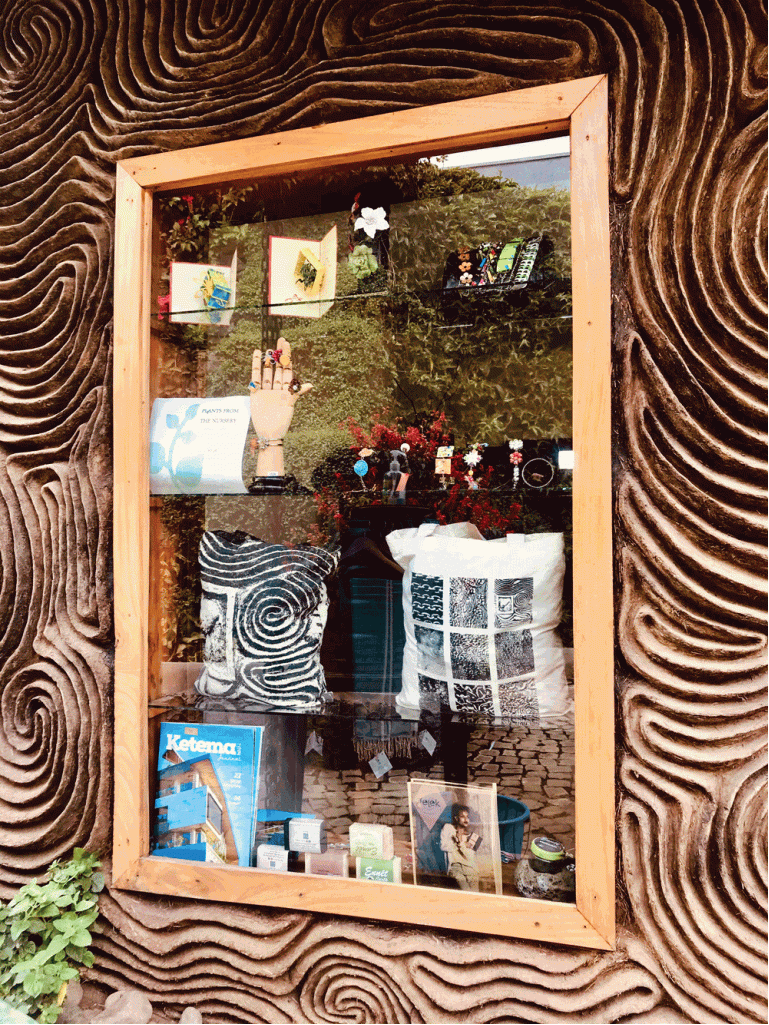
Creating the buildings for the gallery was a feat as well. Assegued was set on constructing them out of mud using a centuries-old vernacular tradition she'd discovered on her anthropological travels around Ethiopia. It was near-impossible for them to obtain a permit to create something new from these materials, so they built on what was already there.
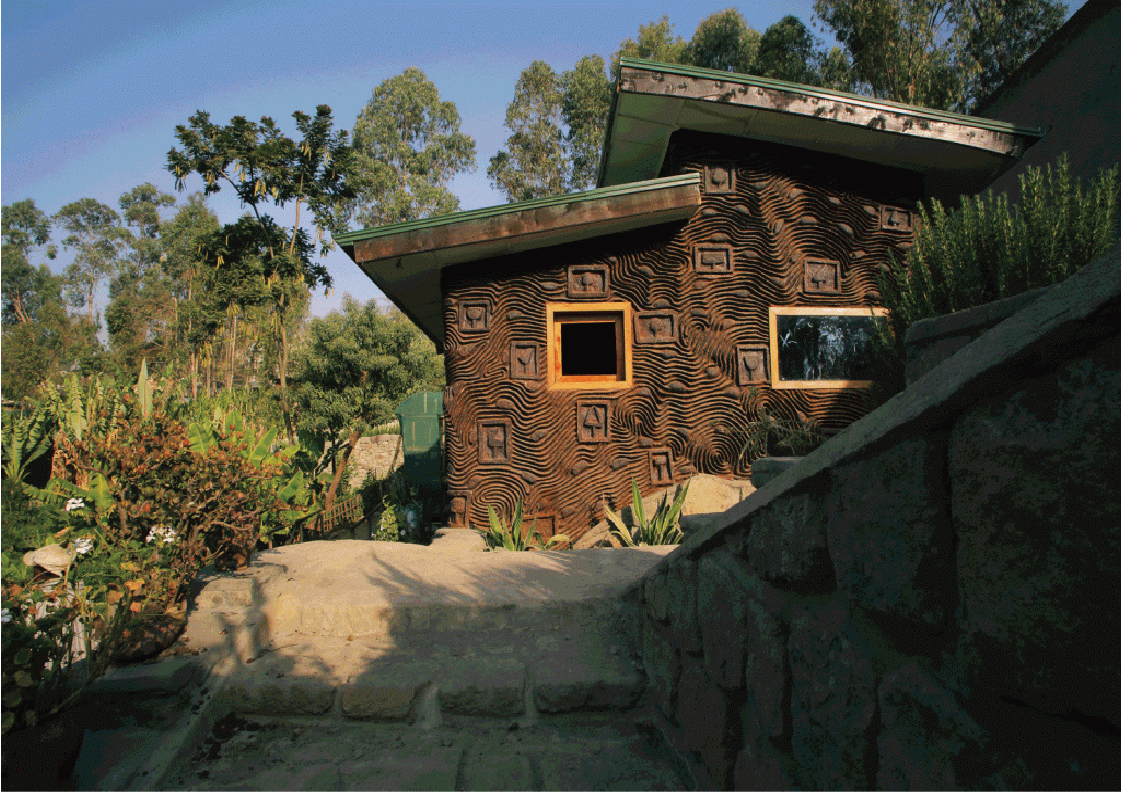
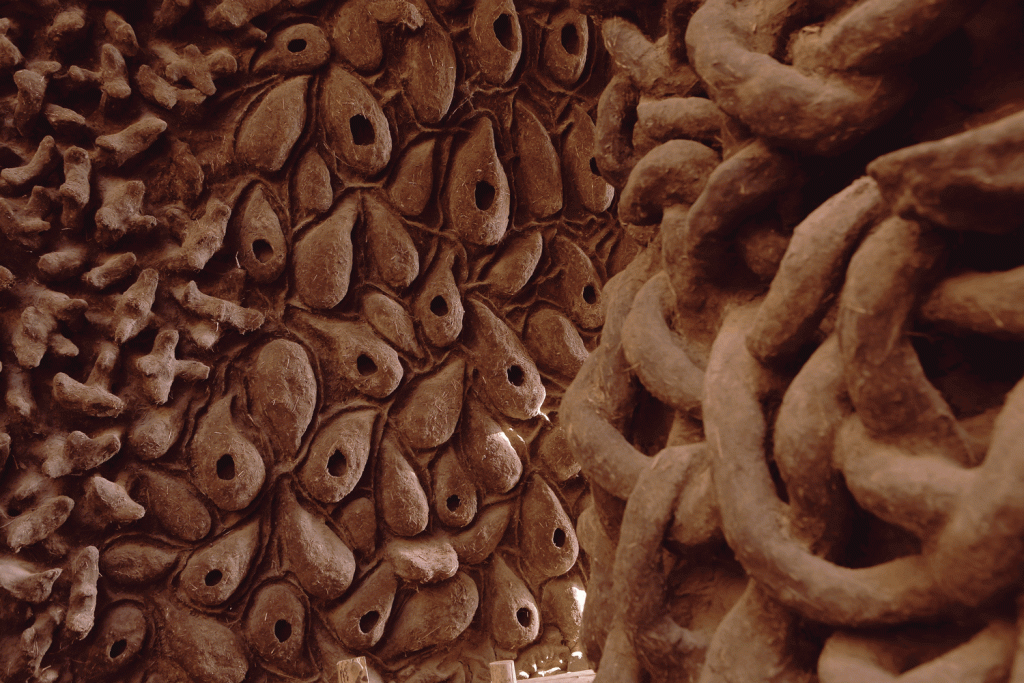
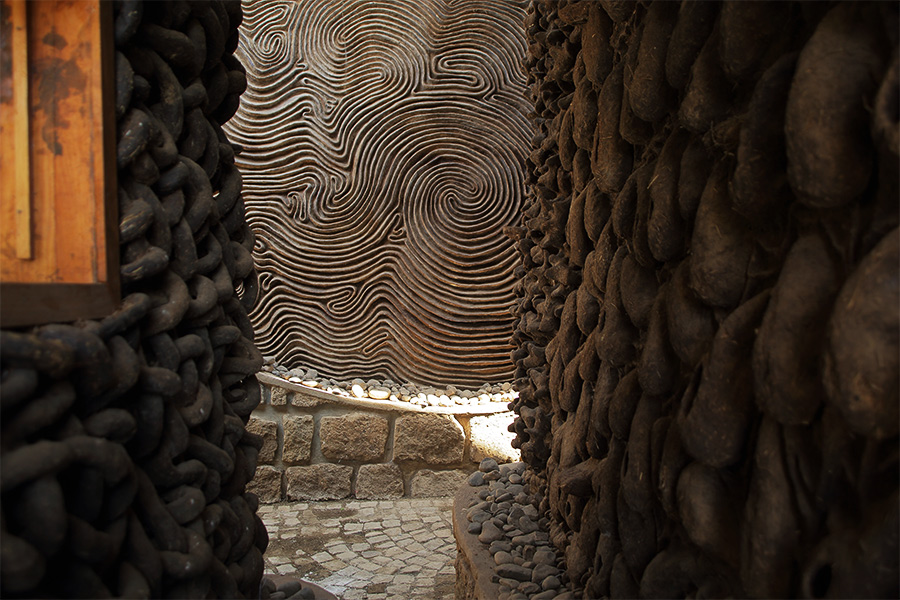
Inspired by the ancient technique of chika (essentially wattle and daub), they built a bamboo frame and created walls from a blend of mud and straw, mixed every three days until fermented and gooey. It was at this stage that Sime used the earthen walls to sculpt patterns based on culturally significant Ethiopian events and ideas. One includes the ancient Ethiopian language Ge'ez, considered by some as the oldest in the world. Each wall, each building, tells a story.
“The public became very interested. People came to see Zoma before we even opened. It surprised them what could be made from this once-polluted land; how the earth can respond when you clean it up and use it properly,” says Assegued. “It was an advocacy to show people that you can change your city or your country or even the world into something green.”
And that's exactly what sets this museum apart: it stands for something. Even when they come up against hurdles, Assegued and Sime persevere to do things the way they believe they should be done. Nothing is done by halves; there's meaning behind everything at Zoma. It's activism in museum form.