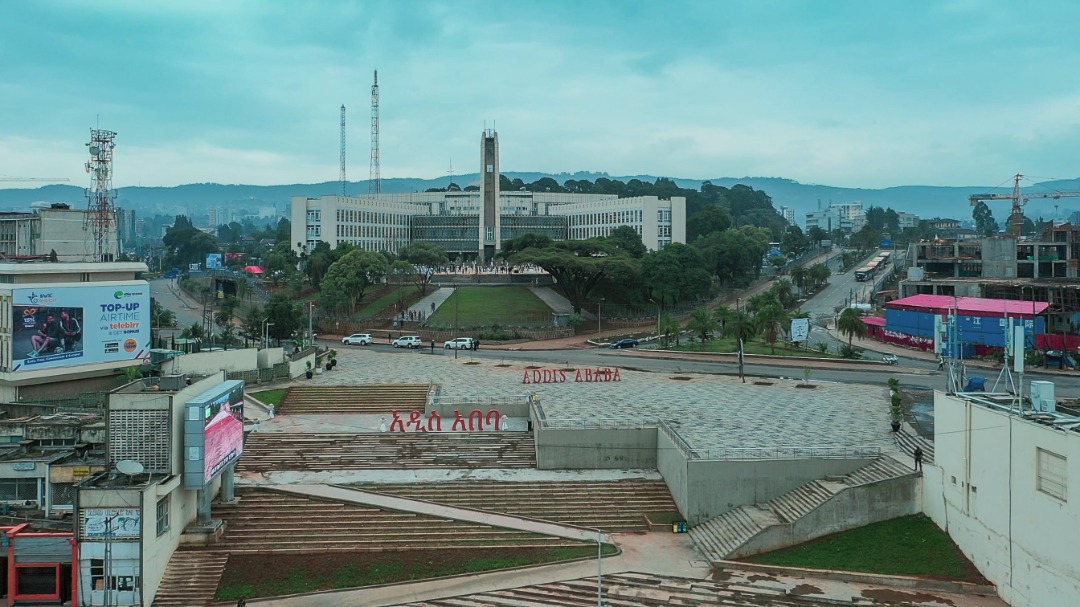
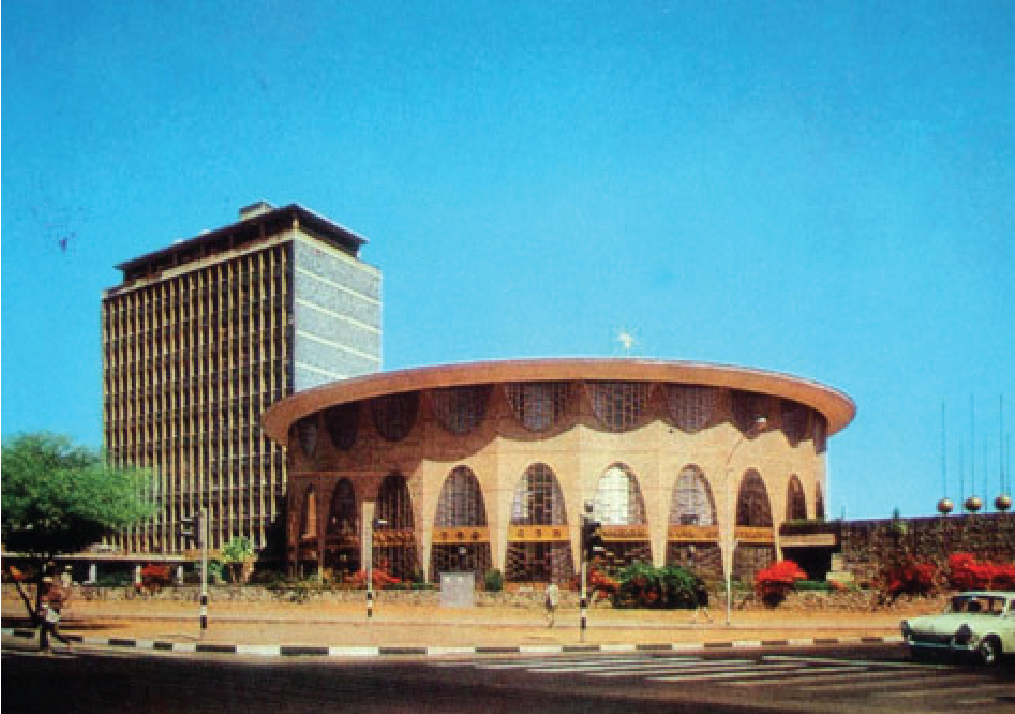
Addis Ababa is located at 9°2 ' north of equator and at 38°45' east. It also lies at an average altitude of 2500 meters above sea level. The northern most part of the city is about 3000 meters above sealevel (part of the Entoto Mountains) while the south most part is about 2200 meters above sea level.
There is no large river passing close to Addis Ababa although anumber of smaller rivers and streams cross it from north to south, such as Kabana, Kurtumi, Ginle, Kotobe and Akaki which arestreaming from entoto mountains. They make deep gorges that have important role in structuring theform of the city.
During the 1910s and the 1920s, there were signicant developments of modern infrastructure and services (roads,schools, hospital, etc.), that contributed to the transformation of the original urban form.
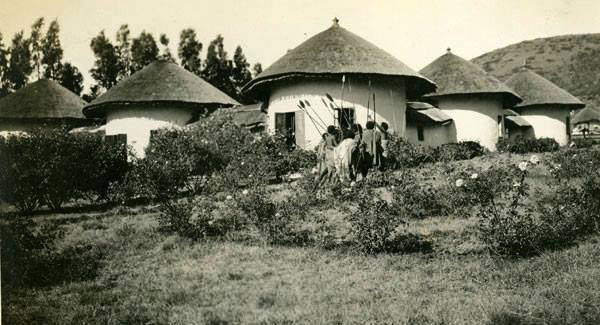
The Heavy Style
This architectural era was distinguished by European influences of grand and solid-looking buildings.
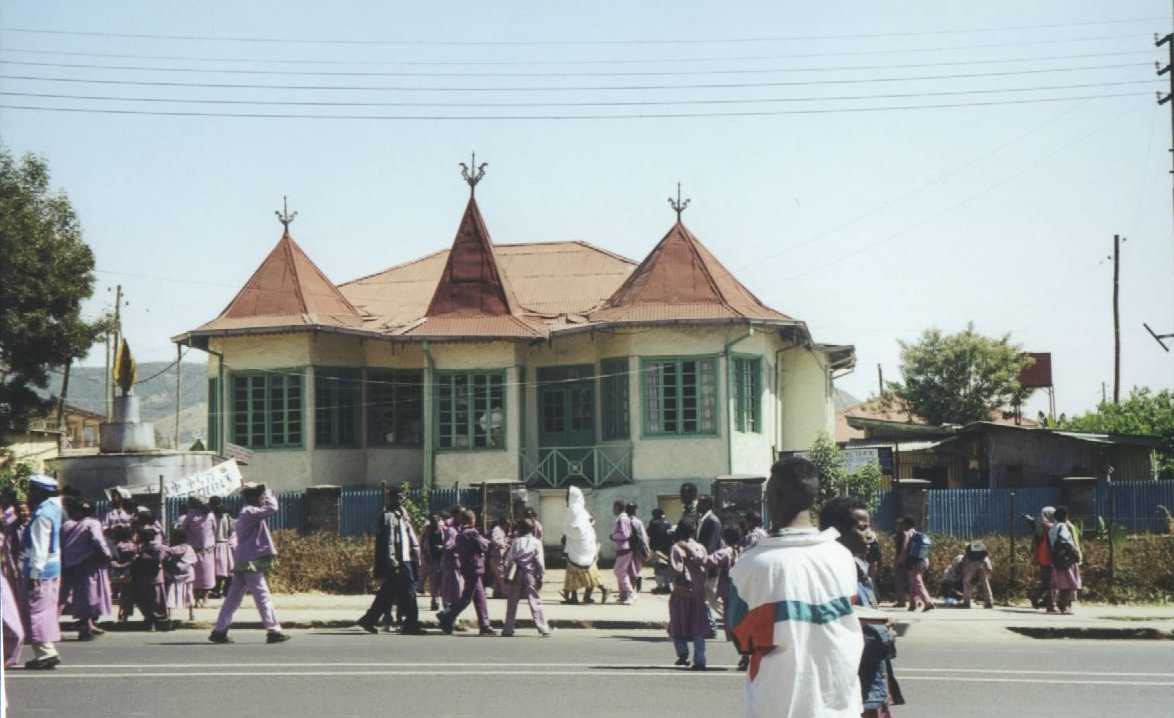
Addis Style (the Late 1800s To Early 1910)
Fanciful roof shapes, painted/decorated balconies, and roofs are the main identifications of buildings constructed in this era. The designs are said to be of Arabian and Indian influences.
Italian Influence
Italians during their brief period in Ethiopia, have made lots of impacts on Addis Ababa's Architecture as well as in some parts of Ethiopia. This influence can be recognized by, Abstract geometrical designs, Smooth plaster Light yellow and beige, and shades of dark red to brown. The Italians also designed master plans for the city, some of which are still being implemented in Addis.
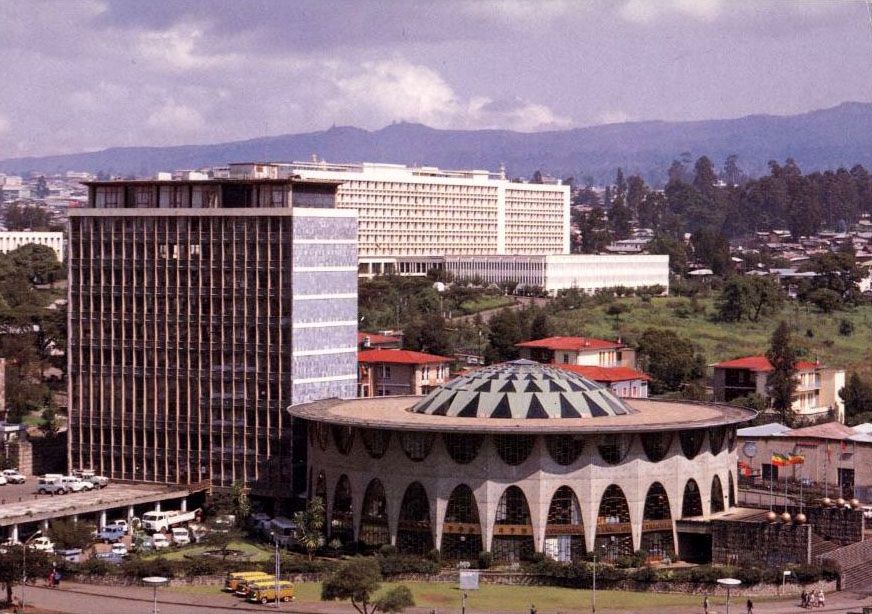
European Influence From the 1960s To Now
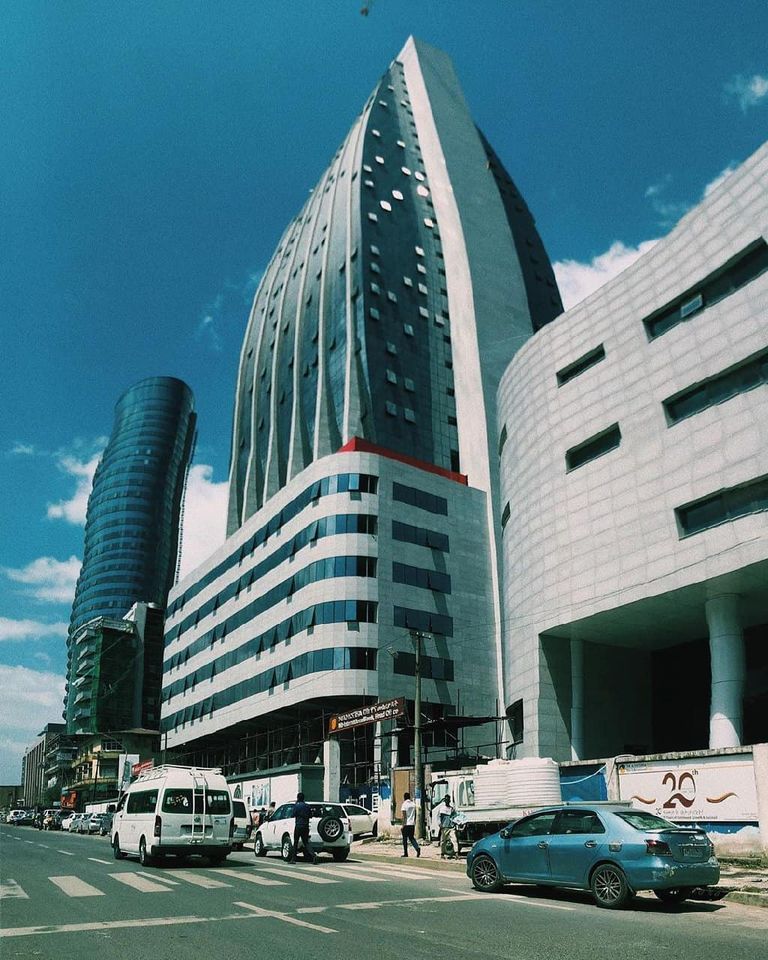
New technologies like pile foundation, vibrated concrete, factory finished materials, use of cranes, design factors, functional requirements, adaptation to industrialized building methods were in this era. This tradition has extended to the current time and buildings are still built with European design and discipline.
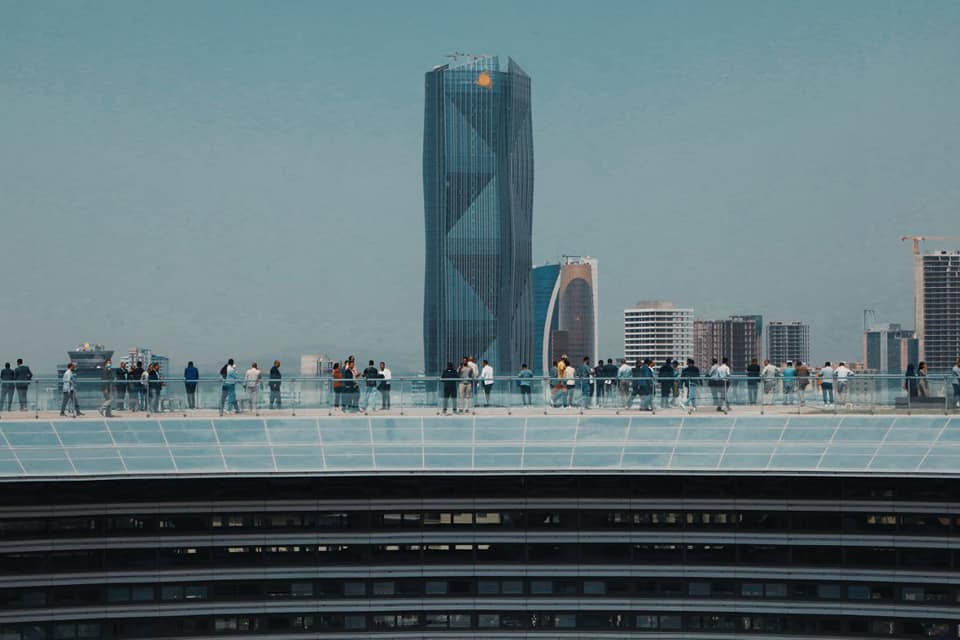
With the current urban transformation underway, many of these precious buildings and others like them will be eclipsed by much taller towers — making us forget that they once embodied modernity in Addis. Their aesthetic quality and originality will remain, however, even as the new New Flower continues to bloom and grow well into the 21st century.